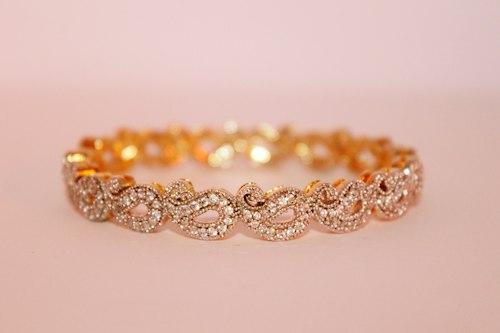
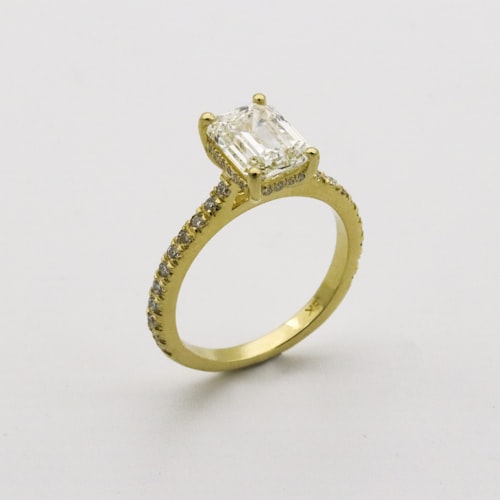
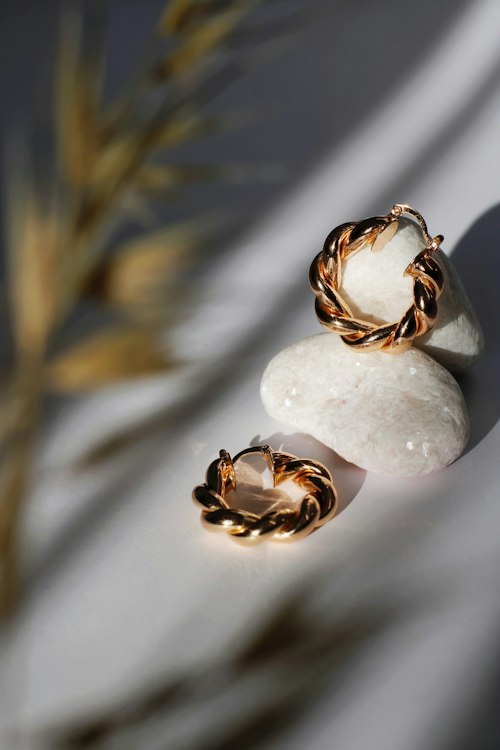
Three generations of master karigars crafting heirloom jewellery in the living tradition of Jaipur's ancient goldsmithing guilds. Each piece is a conversation between 22-karat gold and living stone.
Each collection is born from a particular moment in India's artistic traditions — woven into wearable form.
Kundan
The Jaipur Darbar
Kundan Collection
Jaipur Darbar
24 signature pieces
₹ 1,85,000 — ₹ 12,00,000
Polki
Mughal Garden
Polki Collection
Mughal Garden
18 signature pieces
₹ 2,40,000 — ₹ 18,50,000
Meenakari
Rang Mahal
Meenakari Collection
Rang Mahal
31 signature pieces
₹ 85,000 — ₹ 6,20,000
Temple
Devdasi Heirloom
Temple Collection
Devdasi Heirloom
16 signature pieces
₹ 1,20,000 — ₹ 9,00,000
✦ आर्या ✦
✦ Est. 1962 — Jaipur
Six decades of living craft
When Shri Ratanlal Aarya opened his first workshop on Johari Bazaar in 1962, he carried with him a lineage of goldsmithing stretching back 400 years to the courts of Maharaja Sawai Jai Singh II.
Today, his granddaughter Priya Aarya leads the house — balancing ancestral technique with the sensibility of a new generation of Indian women who wear their heritage with pride.
— Priya Aarya, Creative Director
BIS
Hallmarked Gold
22-karat gold, verified at our Jaipur assaying centre.
GIA
Certified Gems
All stones above 0.5ct carry GIA or IGI certification.
400+
Master Karigars
Hereditary craftsmen across Jaipur, Hyderabad, Kolkata.
A single Aarya piece takes between 3 weeks and 6 months to complete — depending on the complexity of its stone-setting and enamel work.
01
💎
Stone Selection
Our gemmologists travel to Jaipur's Gemstone Exchange twice a year, hand-picking every ruby, emerald and sapphire for colour, clarity and cultural resonance.
02
✏️
Design & Drawing
Designers sketch each piece by hand on archival paper. No CAD. The organic imperfection of a hand-drawn line is the beginning of the jewel's soul.
03
🔨
Goldsmithing
Master karigars forge 22-karat gold using centuries-old techniques: thewa, filigree, and surface repoussé hammered into intricate relief forms.
04
🎨
Meenakari Enamel
The Patel family applies vitreous enamel by hand — each colour fired separately at 800°C to achieve the jewel-like depth Aarya is famous for.
✦ The Stones We Work With
A world of living colour
Each gem carries a geological history spanning millions of years. We treat that history with reverence.
Burmese Ruby
Mogok Valley, Myanmar
Pigeon-blood colour. Fluorescent in sunlight. Aarya sources only GIA-certified Mogok rubies above 1ct.
from ₹ 85,000/ct Per carat
Colombian Emerald
Muzo, Colombia
Vivid green with the "jardin" of natural inclusions that authenticate origin. Pairs with gold for the classic Mughal aesthetic.
from ₹ 60,000/ct Per carat
Kashmir Sapphire
Zanskar Valley, India
Velvety royal blue with a distinctive "sleepy" quality. Fewer than 200 carats mined annually worldwide.
from ₹ 2,20,000/ct Per carat
Basra Pearl
Persian Gulf, Kuwait
Natural saltwater pearls, no nucleus, no treatment. The most prized pearl in Mughal jewellery tradition.
from ₹ 45,000/pc Per piece
✦ Lookbook 2026
The Bridal Edit
01
Kundan · Bridal
Rani Haar Set
02
Polki · Statement
Sheesh Phool
03
Meenakari · Festive
Nauratan Choker
04
Temple · Traditional
Lakshmi Pendant
05
Jadau · Heirloom
Mughal Bazuband
06
Antique · Collector
Pacheli Necklace
✦ Brides & Patrons
Worn with pride
★ ★ ★ ★ ★
My Aarya bridal set was the most commented piece at our wedding. Every guest asked where it was from. Three months later my mother-in-law is ordering her own anniversary set.
PS
Priyanka Sharma
Delhi — November 2025
Jaipur Darbar
★ ★ ★ ★ ★
I've been buying from Aarya for fifteen years. The quality has never wavered. My Kundan necklace from 2009 looks as alive today as it did the day I received it.
RM
Ritu Malhotra
Mumbai — Loyal Client
Mughal Garden
★ ★ ★ ★ ★
As a Kathak dancer I need jewellery that moves with my body. The Aarya temple pieces are perfectly balanced — heavy enough to be seen on stage, light enough to dance in for three hours.
KI
Kavya Iyer
Bengaluru — Performer
Devdasi
✦ Recognition
Recognised by India's finest institutions
🏆
2024
Heritage Jeweller of the Year
Vogue India Beauty Awards
🥇
2023
Top 50 Luxury Brands
Forbes India
🌟
2023
Best Bridal Jeweller
Femina Bridal Awards
🎖️
2022
National Craftsmanship Award
Ministry of Textiles, GOI
✨
2021
GIA Industry Ambassador
Gemological Inst. of America
✦ Our Karigars
The hands behind the gold
Without these master artisans, AARYA is just a name. They are the living tradition.
Ramji Lal Soni
Master Kundan Setter
Johari Bazaar, Jaipur · 3rd Generation
Kundan · Polki · Jadau
45 yrs
Fatima Khatoon
Meenakari Artisan
Old City, Jaipur · 4th Generation
Enamel · Meenakari
32 yrs
Venkatesh Naidu
Temple Jewellery Master
Nagercoil, Tamil Nadu · 5th Generation
Temple · Repoussé
38 yrs
Ashok Babu Ghosh
Gold Filigree Expert
Cuttack, Odisha · 3rd Generation
Filigree · Tarakasi
29 yrs
✦ Join the Inner Circle
First look at new collections
Invitations to private trunk shows, first access to limited bridal sets, and stories from our Jaipur ateliers — before anyone else.
✦ Boutiques
Find us across India
Jaipur
Rajasthan — Flagship
14-A, Johari Bazaar Hawa Mahal Road Jaipur — 302 003
Mon–Sat: 10am–8pmSun: 11am–6pm
FlagshipBridal StudioBespoke
Mumbai
Maharashtra
Shop 4, Maker Chambers IV Nariman Point Mumbai — 400 021
Khader Nawaz Khan Road Nungambakkam Chennai — 600 006
Mon–Sat: 10am–7:30pm
Temple CollectionFull Collection
Our Collections
Nine curated collections spanning the breadth of India's jewellery traditions — from the Mughal-inspired Kundan and Polki pieces of Jaipur to the bold temple jewellery of Tamil Nadu's ancient traditions.
Every collection is designed in collaboration with hereditary karigar families who have mastered these techniques across generations. We do not manufacture. We commission craft.
Kundan
Jaipur Darbar Necklace
Kundan Collection
Jaipur Darbar Necklace
22K Gold · Ruby · Polki Diamond
₹ 4,85,000
Polki
Mughal Garden Choker
Polki Collection
Mughal Garden Choker
22K Gold · Colombian Emerald
₹ 8,20,000
Meenakari
Rang Mahal Bangles
Meenakari Collection
Rang Mahal Bangles (Pair)
22K Gold · Enamel · Ruby
₹ 1,60,000
Temple
Lakshmi Pendant
Temple Collection
Lakshmi Pendant
22K Gold · Red Coral · Pearl
₹ 2,40,000
Jadau
Shahi Bridal Haar
Jadau Collection
Shahi Bridal Haar
22K Gold · Sapphire · Polki
₹ 14,50,000
Navaratna
Nav Ratan Ring
Navaratna Collection
Nav Ratan Ring
22K Gold · Nine Gems
₹ 3,80,000
Bridal
Rani Haar Full Set
Bridal Collection
Rani Haar Full Set
22K Gold · Ruby · Emerald · Diamond
₹ 28,00,000
Antique
Pacheli Collar
Antique Collection
Pacheli Collar
18K Antique Gold · Basra Pearl
₹ 6,20,000
Contemporary
Sufi Earrings
Contemporary Collection
Sufi Earrings
18K Gold · Amethyst
₹ 85,000
Our Story
In 1962, a young goldsmith named Ratanlal Aarya opened a modest workshop at 14-A Johari Bazaar, Jaipur. He had apprenticed for twelve years under the master Kundan setter Kishan Das Soni, and carried in his hands the accumulated wisdom of four centuries of Rajput court jewellery.
"Gold does not make the jewel. The karigar's intention makes the jewel. Gold is only the medium through which love takes permanent form." — Ratanlal Aarya, 1962
Three generations later, his granddaughter Priya Aarya directs the house with the same conviction — honouring the old techniques while building a vocabulary of Indian luxury that speaks to a new generation of culturally rooted, aesthetically fluent Indian women.
Today AARYA employs over 400 master artisans across six workshops in Jaipur, Hyderabad, and Kolkata — each a practitioner of a specific regional jewellery tradition, each from a family that has practised it for generations.
A heritage in gold
1962
The Workshop Opens
Ratanlal Aarya opens his first atelier at 14-A Johari Bazaar with four karigars and a commission from the Maharaja of Bikaner's household.
1978
The Meenakari Guild
Aarya formalises an exclusive partnership with the Khatoon family of Old Jaipur — the most celebrated meenakari practitioners in Rajasthan.
1989
Second Generation
Suresh Aarya expands the house to include temple jewellery, partnering with the Naidu family of Nagercoil — 5th-generation practitioners of the Tanjore tradition.
1998
First Mumbai Boutique
AARYA opens at Nariman Point, bringing Jaipur's heritage jewellery to a national audience. The opening collection "Zenana" sells out in three days.
2008
GIA Partnership
AARYA becomes the first Indian jeweller to require GIA certification on all stones above 0.5 carats — an industry-first commitment to transparency.
2016
Third Generation
Priya Aarya, with a degree from London College of Fashion and an apprenticeship at Cartier Paris, takes over as Creative Director.
2022
National Craft Award
The Government of India's Ministry of Textiles presents AARYA with the National Craftsmanship Award for preserving traditional jewellery techniques.
2026
Today
8 boutiques across India. 400+ artisan partners. 9 collections. And still the same four walls of the Johari Bazaar workshop where everything began.
✦ The Aarya Family
Three generations, one vision
Priya Aarya
Creative Director · 3rd Generation
Trained at London College of Fashion and Cartier Paris. Priya returned to Jaipur in 2016 determined to build a house that honours the past without being frozen in it. Three consecutive Vogue India Heritage Jeweller of the Year awards followed.
"Every jewel is a record of someone's hands, someone's thirty years of practice. My job is to make sure that record is never lost."
Suresh Aarya
Chairman · 2nd Generation
Suresh expanded AARYA from a single Jaipur workshop into a nationally recognised house. His 1989 decision to partner with South Indian temple jewellery masters transformed the company's range and reputation.
"A jeweller's reputation is built in years and destroyed in minutes. Every piece carries our name. Treat it accordingly."
Ratanlal Aarya
Founder · 1962–2004
A goldsmith's apprentice who became one of India's most respected jewellers. Ratanlal spent 42 years in the workshop, setting stones until the year he passed. His tools hang at the Jaipur flagship — polished and never put away.
"Gold is patient. It waits for the right hands. Find the right karigar, give him the right stone, and step aside."
✦ Our Commitments
🏅
BIS Hallmarked Gold
All AARYA gold is tested and hallmarked by Bureau of Indian Standards. 22K or 18K — verified, documented, certified.
💎
GIA / IGI Certified Gems
Stones above 0.5ct carry independent GIA or IGI grading reports. You receive the certificate with your jewel.
🌱
Ethical Sourcing
All stones are sourced through certified supply chains compliant with the Kimberley Process.
🤝
Karigar Welfare
AARYA pays artisans 40% above market rate, with health insurance, school fees, and retirement support.
♻️
Recycled Packaging
All AARYA boxes are made from recycled handmade paper from Sanganer, Jaipur, dyed using natural pigments.